EMOTION REGULATION APP

Evidence-based emotional support
- not just another mindfulness app

Product Design

UX Research

Figma

Design Systems

Miro

AI Tools

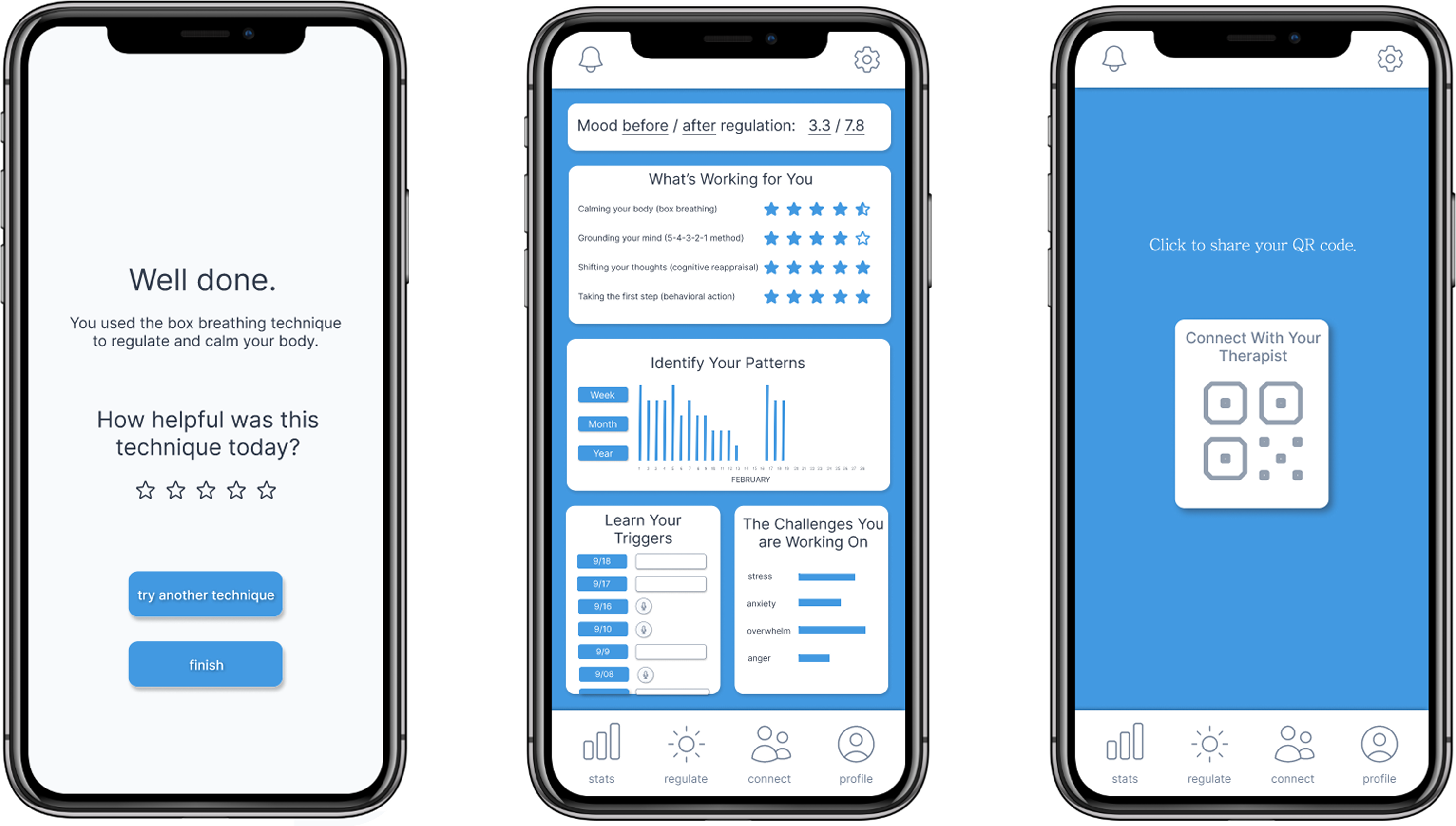
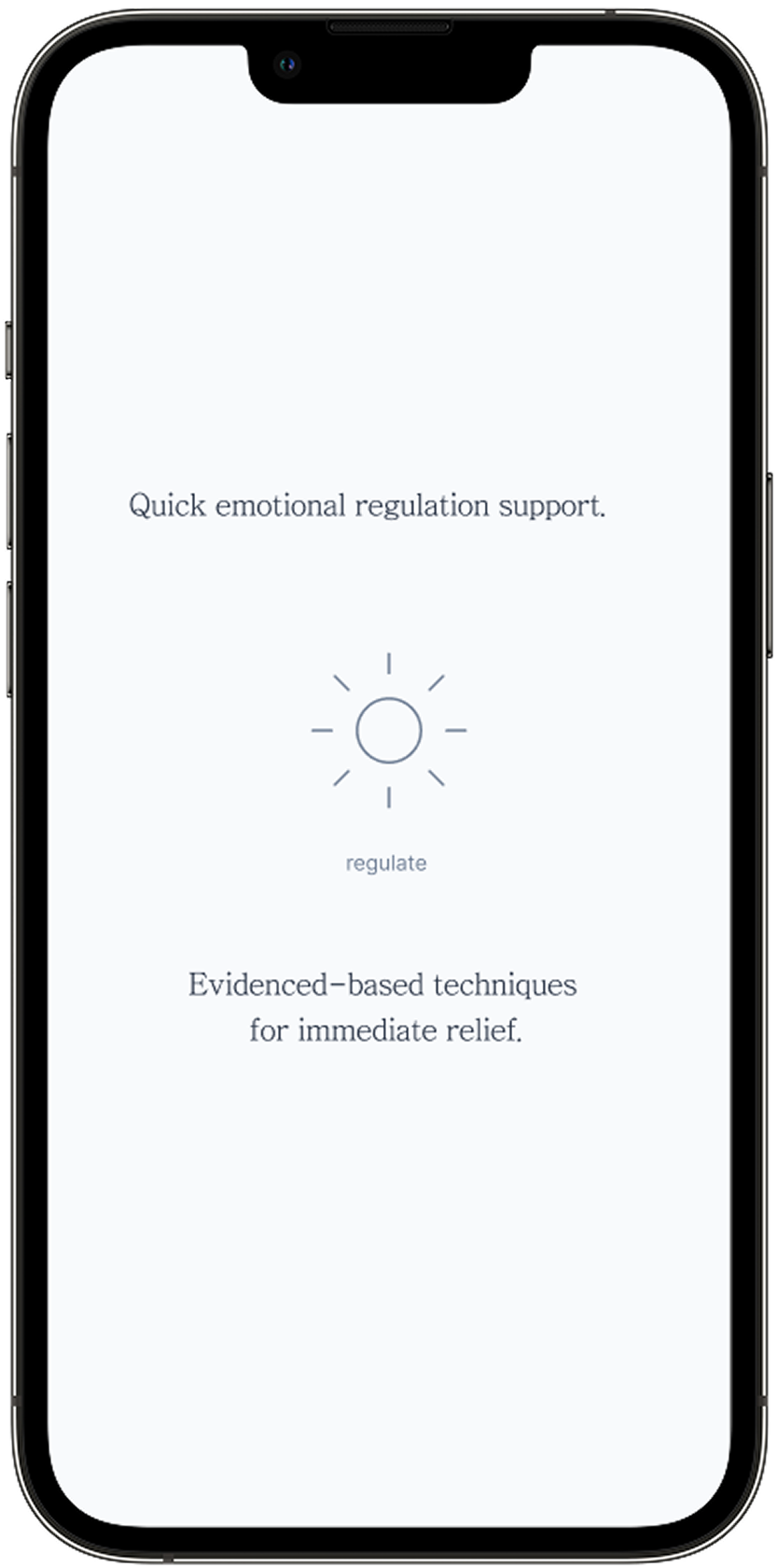
Mobile app delivering immediate emotional regulation through four evidence-based techniques: breathing, grounding, cognitive reappraisal, and behavioral activation.

Designed 2-5 minute interventions grounded in clinical research, serving individuals and caregivers managing emotional dysregulation and mental illness.

1 week

Emotional support app mobile screens showing evidence-based regulation techniques

PROBLEM

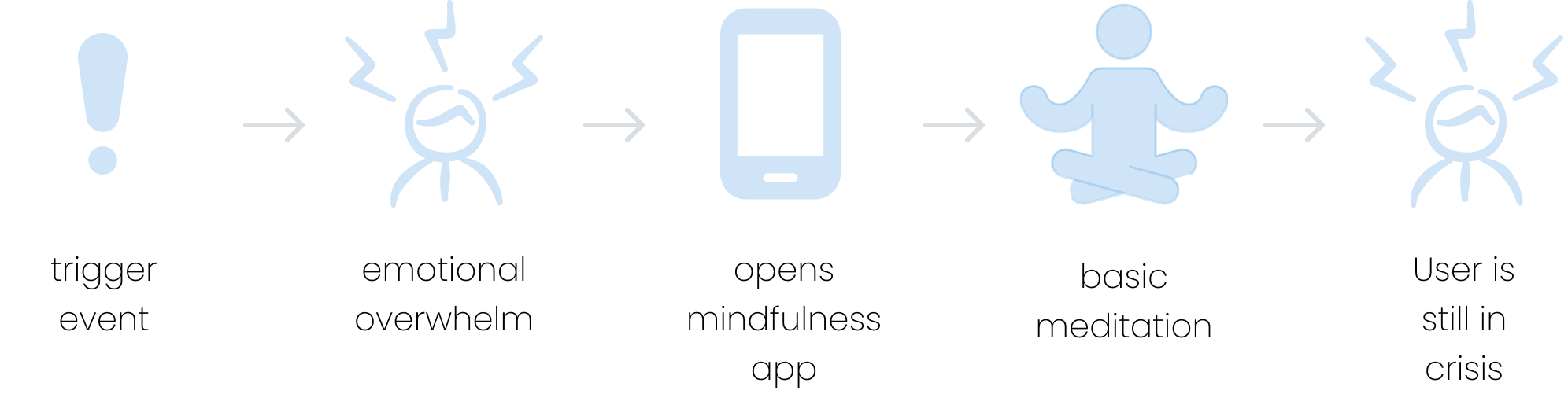
Existing wellness apps offer generic mindfulness but lack targeted interventions for emotional regulation during high-stress moments.

Individuals with emotional dysregulation, who experience anxiety, depression, PTSD, or overwhelm, and their caregivers, need immediate, evidence-based tools - not just meditation timers.

Emotional regulation skills are teachable and clinically proven, yet no app addresses this with required rigor. A targeted solution could provide immediate crisis relief while building long-term skills.

Behaviors & Needs:

  • Logs emotions during lunch breaks to identify triggers and track patterns
  • Reviews weekly analytics
  • Uses app data in therapy sessions
  • Seeks evidence-based approaches to complement professional health care

Sarah

"The Pattern Tracker"

Age 29

"I need to see the data to understand my emotional patterns."

Behaviors & Needs:

  • Uses app  for immediate anxiety relief
  • Accesses calming exercises before presentations when feeling panicked
  • Manages depression/anxiety symptoms  without regular therapy access
  • Needs quick interventions (2-5 minutes)

Alex

"The Anxious Student"

Age 20

"I get completely overwhelmed during exams and social situations."

Constraints

Environment

  • Users need immediate crisis relief, not lengthy interventions
  • Interventions must work within 2-5 minute windows
  • Privacy concerns prevent professional mental health app usage
  • Financial constraints limit access to professional therapy
  • Design balances clinical effectiveness with approachable experience

Goals

  • User: Develops regulation skills; manages anxiety/depression affordably; understands emotional triggers; accesses immediate crisis support.
  • Design: Delivers evidence-based interventions in 2-5 minutes with pattern recognition features.
  • Business: Achieves retention through specialized value and healthcare integration.

PROCESS

1 | RESEARCH

Grounded in clinical reality, studied established emotion regulation assessments, mobile mental health research, and peer-reviewed CBT validation studies before touching a wireframe.

2 | DEFINE

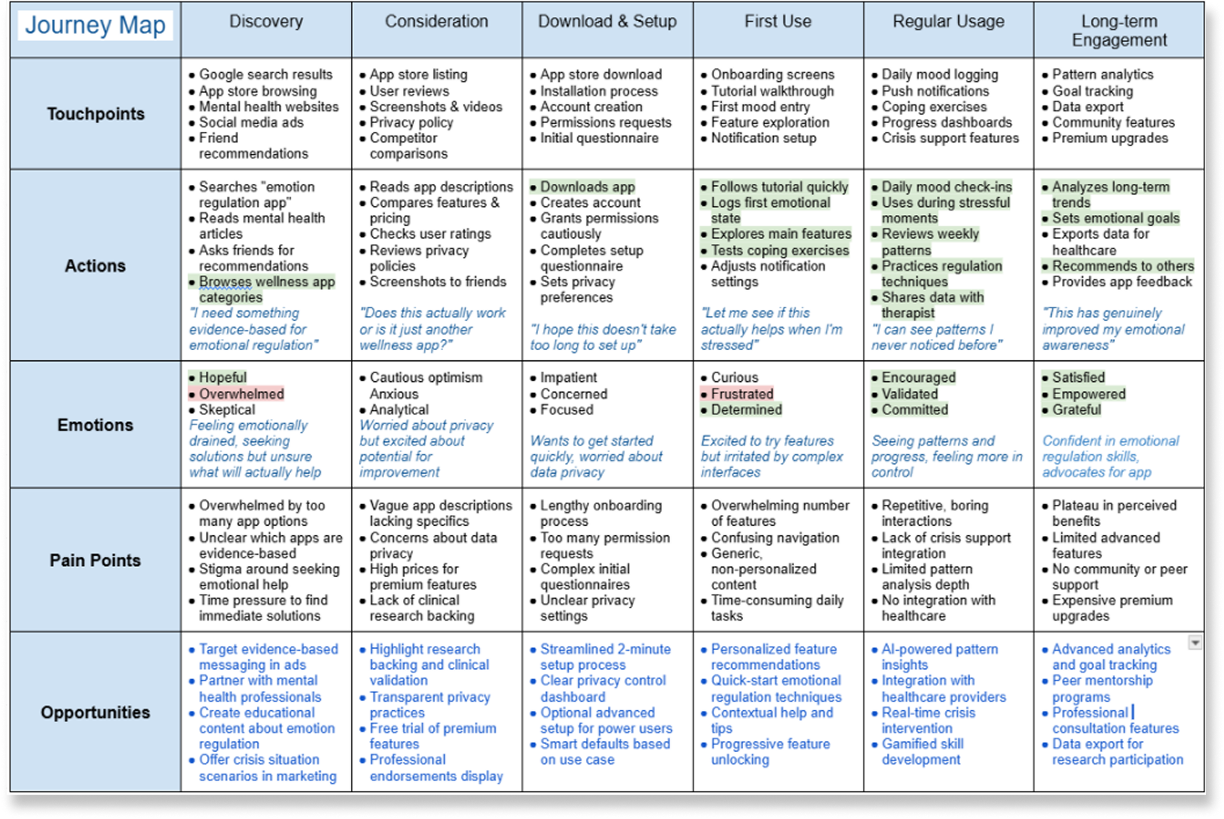
Synthesized clinical and UX research into empathy maps and journey maps; sharpened the framing question to focus on personalized, evidence-based regulation - not generic wellness.

3 | IDEATE

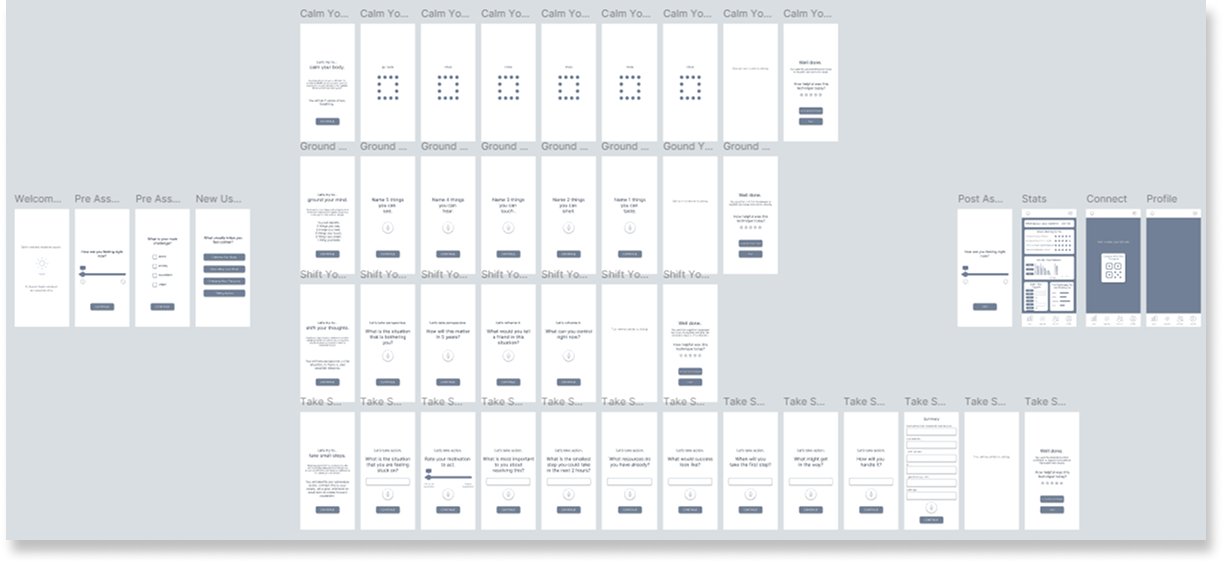
Explored intervention techniques and user flow structures through sketching and wireframing, testing how clinical rigor and approachable UX could coexist in a 2–5 minute window.

4 | PROTOTYPE

High-fidelity interactive prototype built around four core task flows - each mapped to a distinct, clinically validated regulation technique.

5 | TEST

Informal usability testing focused on two things: could users complete the flows, and did the interventions feel effective within the time constraint?

6 | ITERATE

Documented concrete opportunities for next iteration:  gamification, language accessibility for younger users - treating scope boundaries as a starting point, not a ceiling.
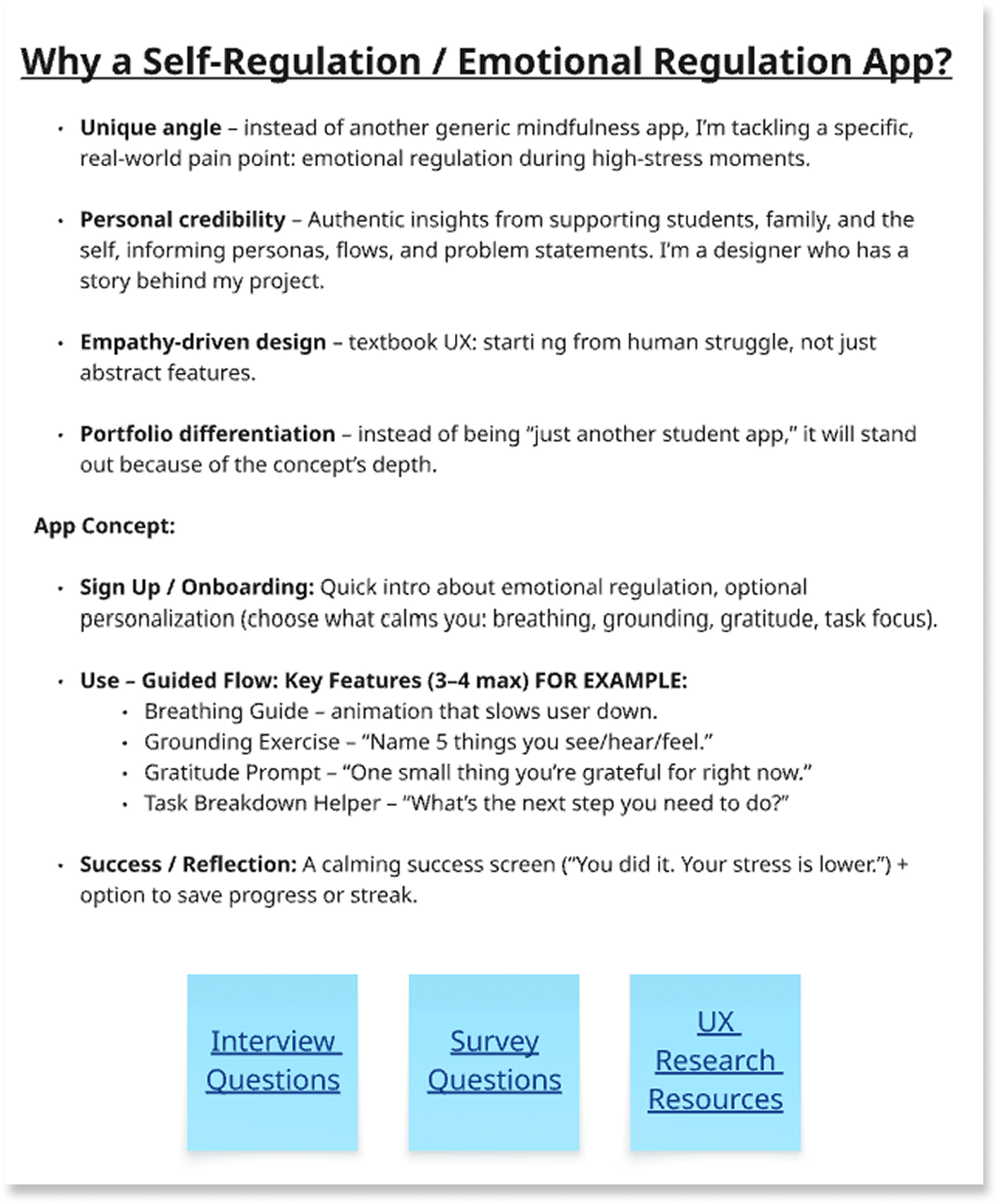
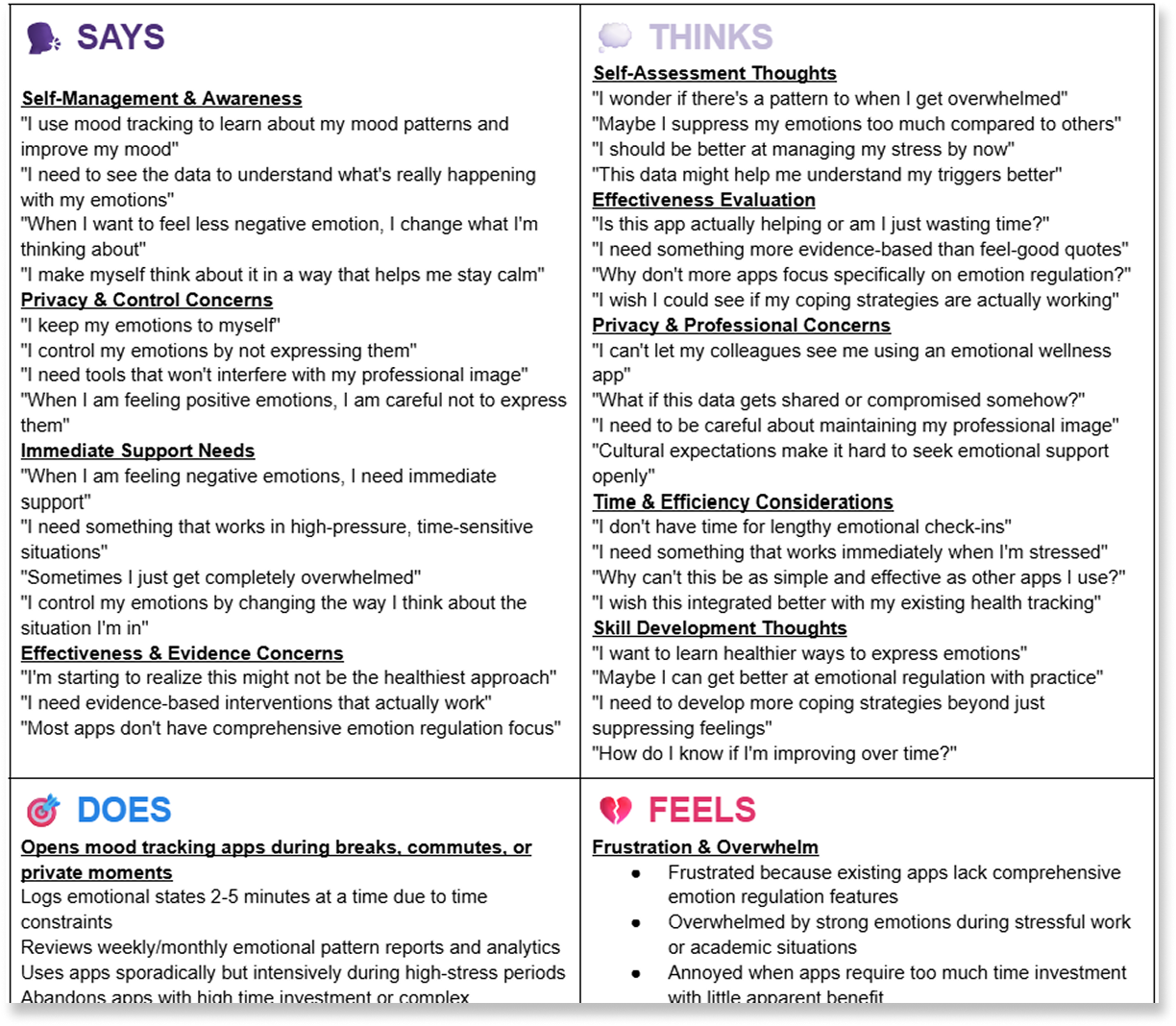
Overview of synthesized research

Synthesized research

empathy map of user experiencejourney map of user experience

Developed empathy and journey maps

Low-fidelity wireframe of emotional support app showing end-to-end task flow

Generated solutions through sketching and wireframing

Key Decisions

1 | Micro-Interventions for In-Moment Relief

DECISION

Implemented 2-5 minute intervention windows for all exercises.

RATIONAL

Users need immediate crisis relief, not lengthy sessions. Time-constrained interventions respect busy schedules while maintaining clinical effectiveness and encouraging consistent use.

TRADEOFF

Accessibility and immediate crisis support outweighed comprehensive treatment. App complements rather than replaces professional care.

2 | Multiple Regulation Techniques, Not One

DECISION

Offered four distinct evidence-based techniques - not a single mindfulness approach.

RATIONAL

Users have different regulation success and situational needs. Multiple validated techniques let users discover what works personally, increasing long-term engagement and effectiveness.

TRADEOFF

More options create initial complexity, but personalization and user agency justify the learning curve - technique preference significantly impacts regulation success.

3 | Privacy-First by Default Architecture

DECISION

Prioritized privacy-first architecture with optional data sharing.

RATIONAL

Complete privacy by default with optional healthcare provider sharing - this addresses critical barrier identified in research.

TRADEOFF

Privacy limits analytics and community features, but user trust and professional usability outweighed social engagement opportunities that might deter primary users.

Design solutions

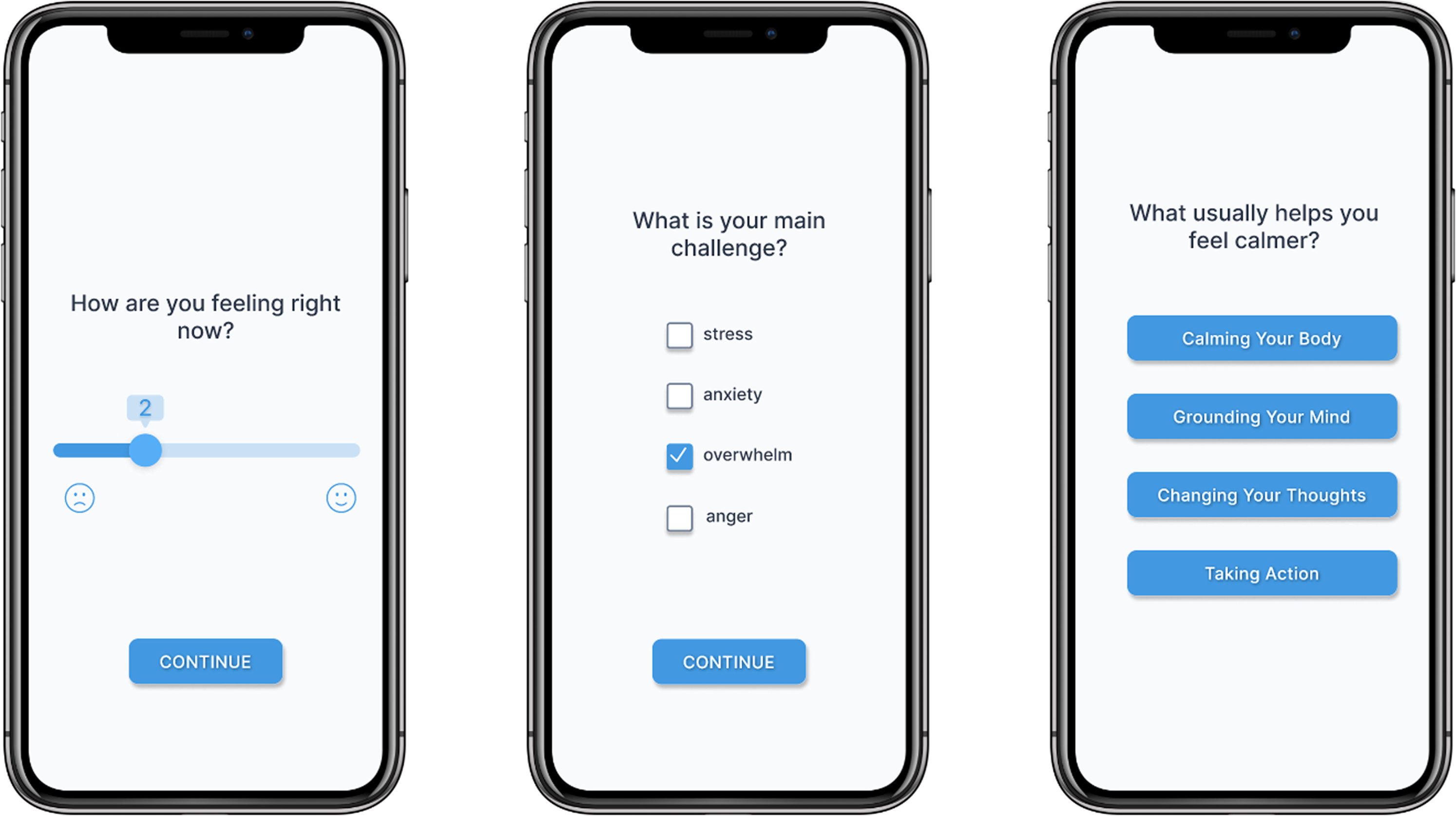
Mobile screen of emotional support app showing emotion logging chart and pattern tracker

1-5 emotional intensity slider  |  challenge type pattern recognition  |  preferred technique selection
30-second personalized intervention matching

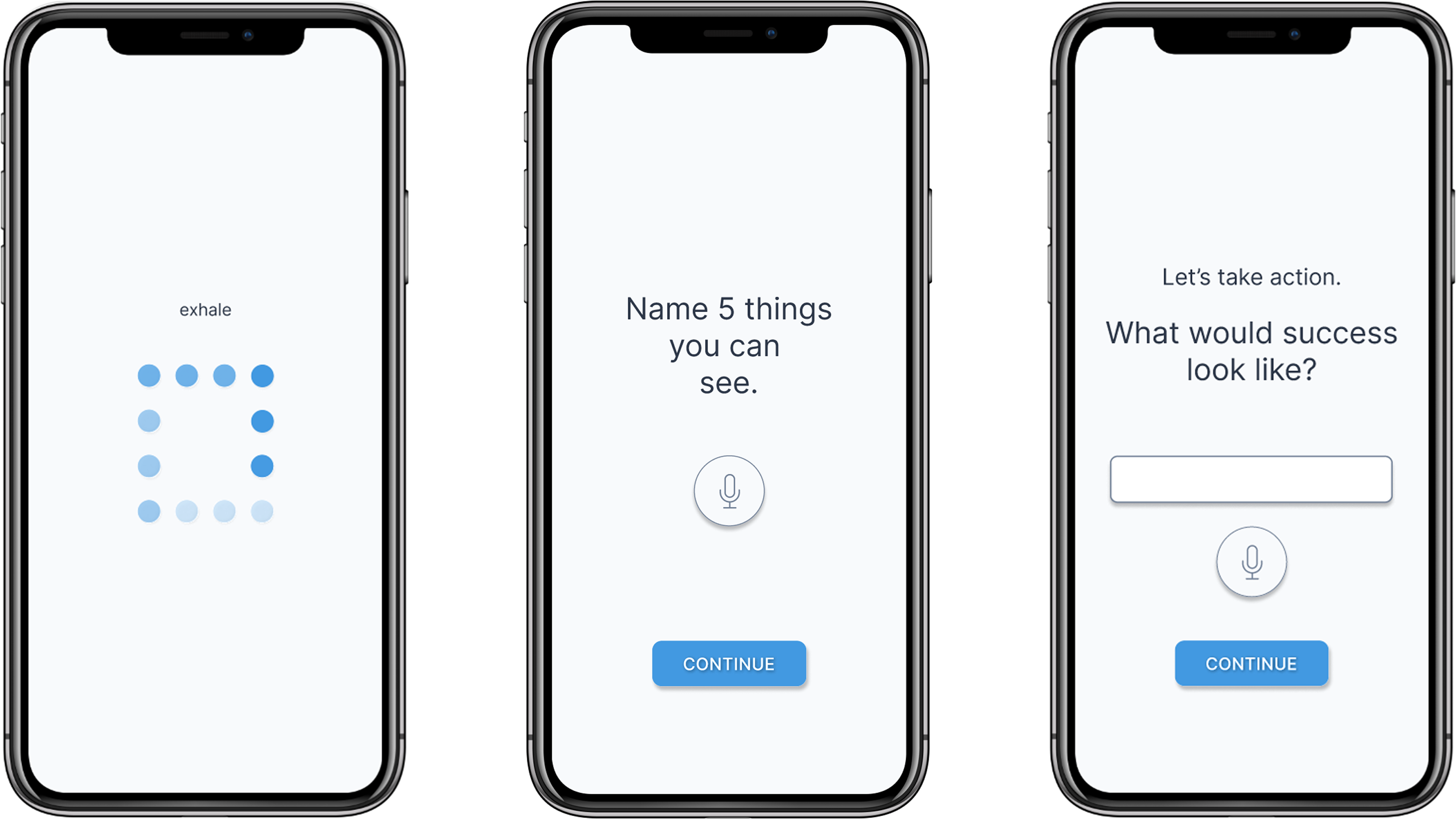
Guided breathing exercise interface with animated breath indicator, Mobile mockup of grounding or cognitive reappraisal exercise from the emotional support app, Mobile screen of emotional support app presenting intervention options for emotion regulation

Visual breathing animation with progress indicator  |  Progressive prompts  |  Guided reframing questions  |  Perspective-shifting techniques
Evidence-based physiological regulation that transform thought patterns in 2 minutes

App interface comparing user reported emotion state before and after intervention

Before/after emotion comparison  |  Effectiveness rating  |  Physiological feedback messaging  |  Data sharing with a healthcare professional
Track progress, recognize patterns and build regulation skills

Outcomes

Expected Impact:

Designed for measurable impact: interventions grounded in validated clinical frameworks for anxiety, depression, and PTSD/CPTSD (targeting outcomes typically reported in CBT research).

User Validation:

Validated intervention timing: all test users completed full regulation exercises within the 2–5 minute window, confirming the core design constraint was met.

Quality Improvement:

All four regulation techniques (breathing, grounding, cognitive reappraisal, and behavioral activation) are grounded in peer-reviewed clinical research, not generic wellness content

Learning

What Worked

Deep heuristic evaluation grounded design

What Changed

Narrowed from broad wellness to specific regulation

What I'd Improve

Add gamification and differ language for younger audiences

What Surprised Me

Following full design process prevented premature solution-jumping

Looking for a Product Designer who brings strategic, critical thinking and user empathy?

Let's talk.

Resume  |  Contact